7 HVAC Company Website Design Benefits That Matter
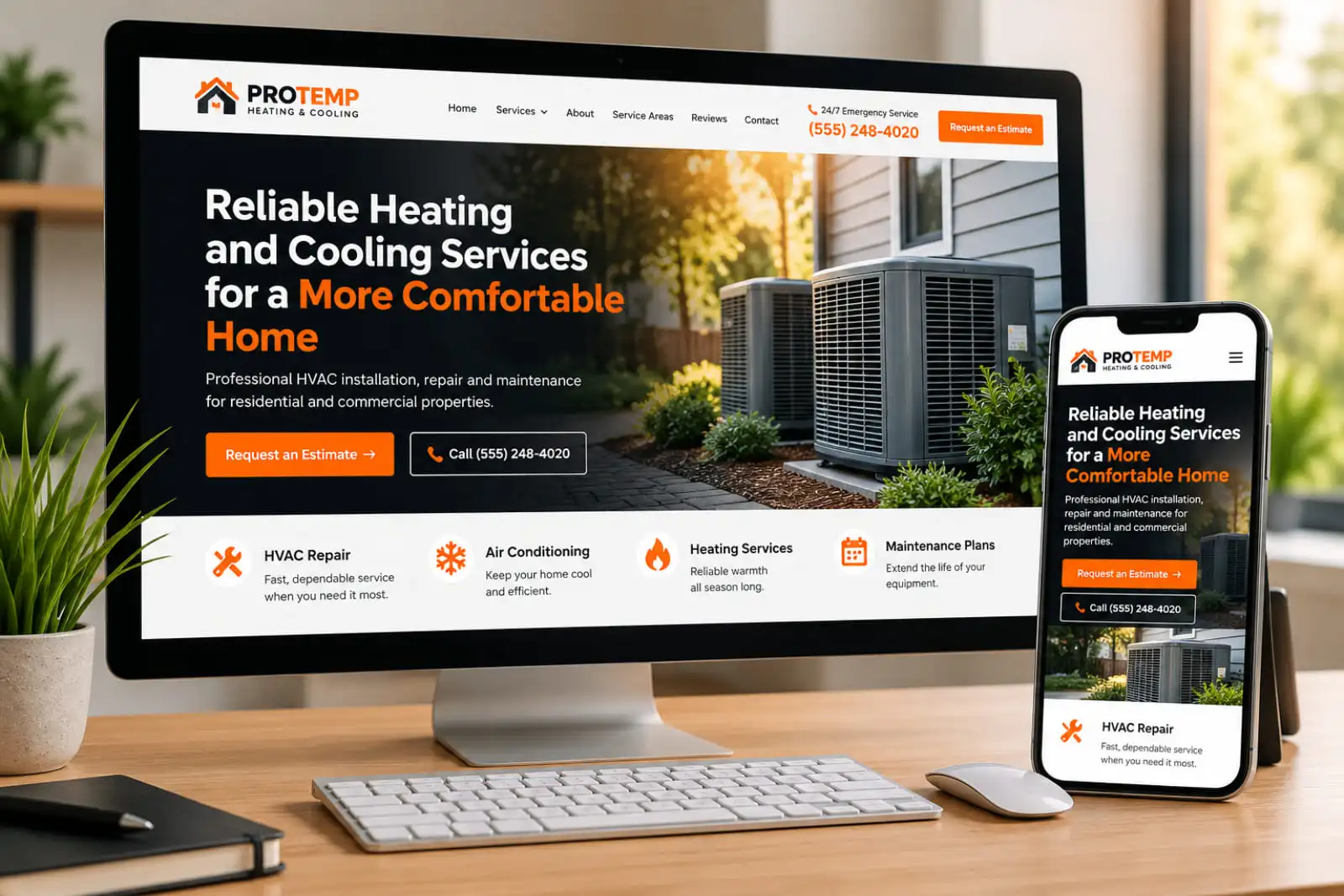
A professional website can help an HVAC company build customer trust, explain its services clearly, improve the experience for mobile visitors, and make it easier for potential customers to request an estimate or schedule service. The benefits of HVAC company website design go beyond appearance: a well-planned website connects your online presence with the way people discover, evaluate, and contact your business.
Whether you operate a residential heating and cooling company, a commercial HVAC business, or a mechanical contracting firm, your website should make it easy for visitors to understand what you offer and what to do next.
Here are seven practical benefits of professional website design for an HVAC business, along with the features that can help deliver them.
Table of Contents
1. Build Trust and Make a Strong First Impression
Before contacting an HVAC company, potential customers may compare several businesses online. Your website helps them decide whether your company appears professional, established, and relevant to their needs.
An outdated layout, broken links, inconsistent branding, or missing contact information can create unnecessary doubts. A polished, organized website helps communicate that your business takes its online presence seriously.
To see how these principles can be applied in practice, explore our HVAC website design portfolio for examples of website projects created for service businesses.
What makes an HVAC website look trustworthy?
Focus on elements that help visitors verify who you are and understand your business:
Consistent branding: Use your company logo, colors, typography, and visual style consistently.
Clear service information: Explain the heating, cooling, maintenance, installation, or commercial services you actually provide.
Real business details: Display accurate contact information, operating hours, and relevant service-area information.
Authentic reviews: Showcase genuine customer feedback with appropriate attribution.
Professional photography: Use relevant, high-quality images of your team, completed work, equipment, or facilities when available.
Easy navigation: Make essential pages accessible without forcing visitors to search through confusing menus.
Trust also depends on accuracy. Avoid fabricated testimonials, misleading certifications, or stock photography presented as your actual team.
Practical tip: Review your website as if you were a first-time customer. Can you identify the business, understand its services, find its contact information, and determine the next step within a few moments?
2. Improve Mobile Usability for Customers on the Go
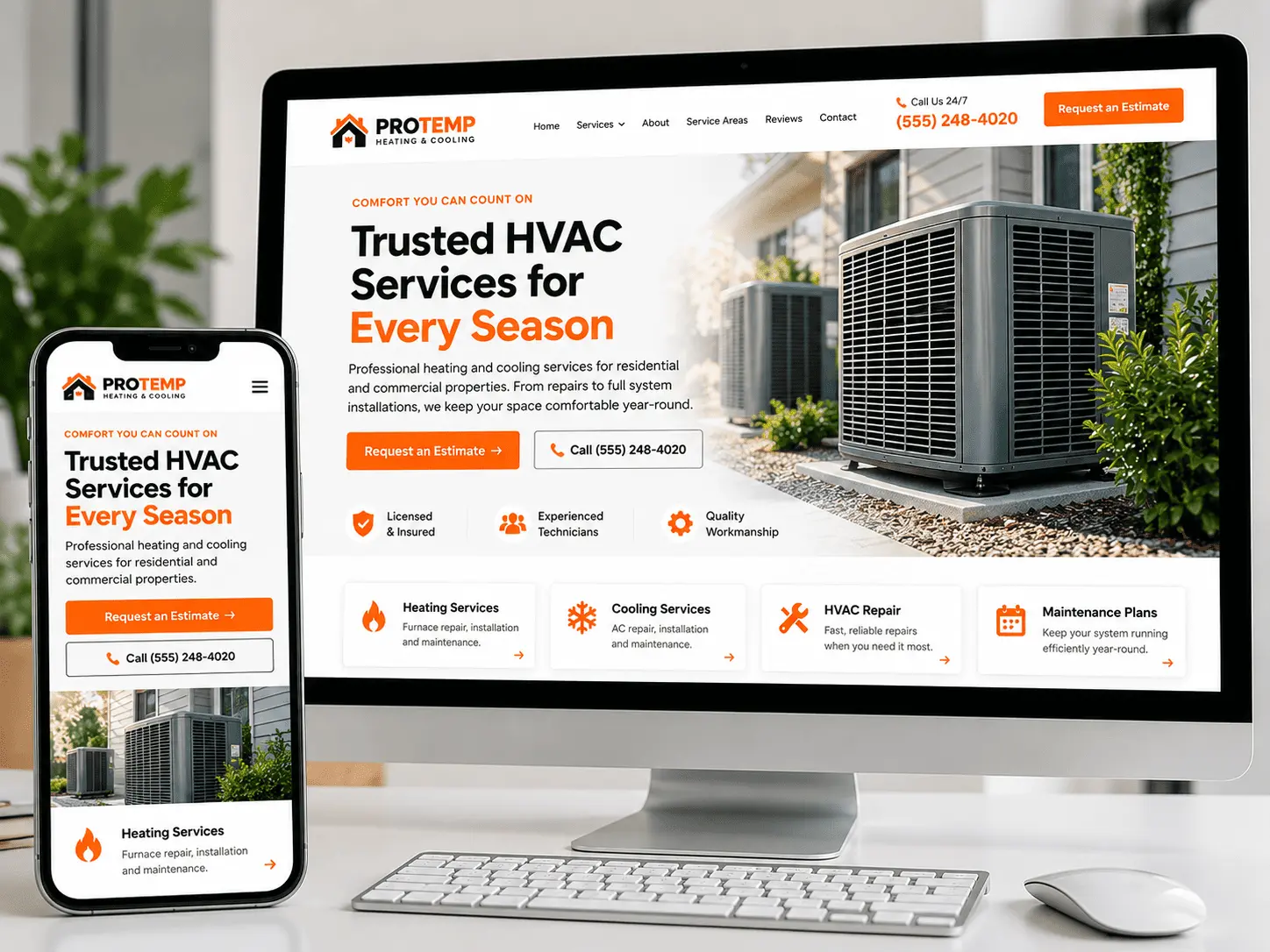
People may search for HVAC services while at home, at work, or dealing with an unexpected heating or cooling problem. Many will access your website using a smartphone.
A website that looks attractive on a desktop but requires visitors to zoom, scroll horizontally, or struggle with tiny buttons creates unnecessary friction.
Responsive website design adjusts the layout to different screen sizes, helping visitors read information and interact with your website on phones, tablets, and desktop computers.
It creates a credible first impression
A professional design, consistent branding, clear service descriptions, and accurate contact information help establish a coherent business presence.
Trust should also be supported by genuine evidence. Depending on what your company can substantiate, this might include verified reviews, relevant licenses, insurance information, manufacturer certifications, photographs of completed projects, or details about the team.
Do not display credentials, testimonials, or affiliations that your business cannot verify.
Essential mobile-friendly features
A well-designed HVAC website should include:
Readable text without requiring visitors to zoom in.
Buttons large enough to tap comfortably.
A mobile navigation menu that works reliably.
Click-to-call phone numbers.
Short, usable contact and estimate-request forms.
Images that fit the screen without slowing down the page unnecessarily.
Clear service information that remains easy to scan.
Consider a homeowner comparing two HVAC companies on a smartphone. One website has a tiny phone number buried in the footer. The other presents its services clearly and includes an accessible call button near the top of the page. The second website makes contacting the business easier, although the visitor’s final choice will also depend on factors such as availability, pricing, reviews, and reputation.
Test important pages on actual mobile devices rather than relying exclusively on a desktop preview.
3. Support Search Engine Visibility and Local Discovery
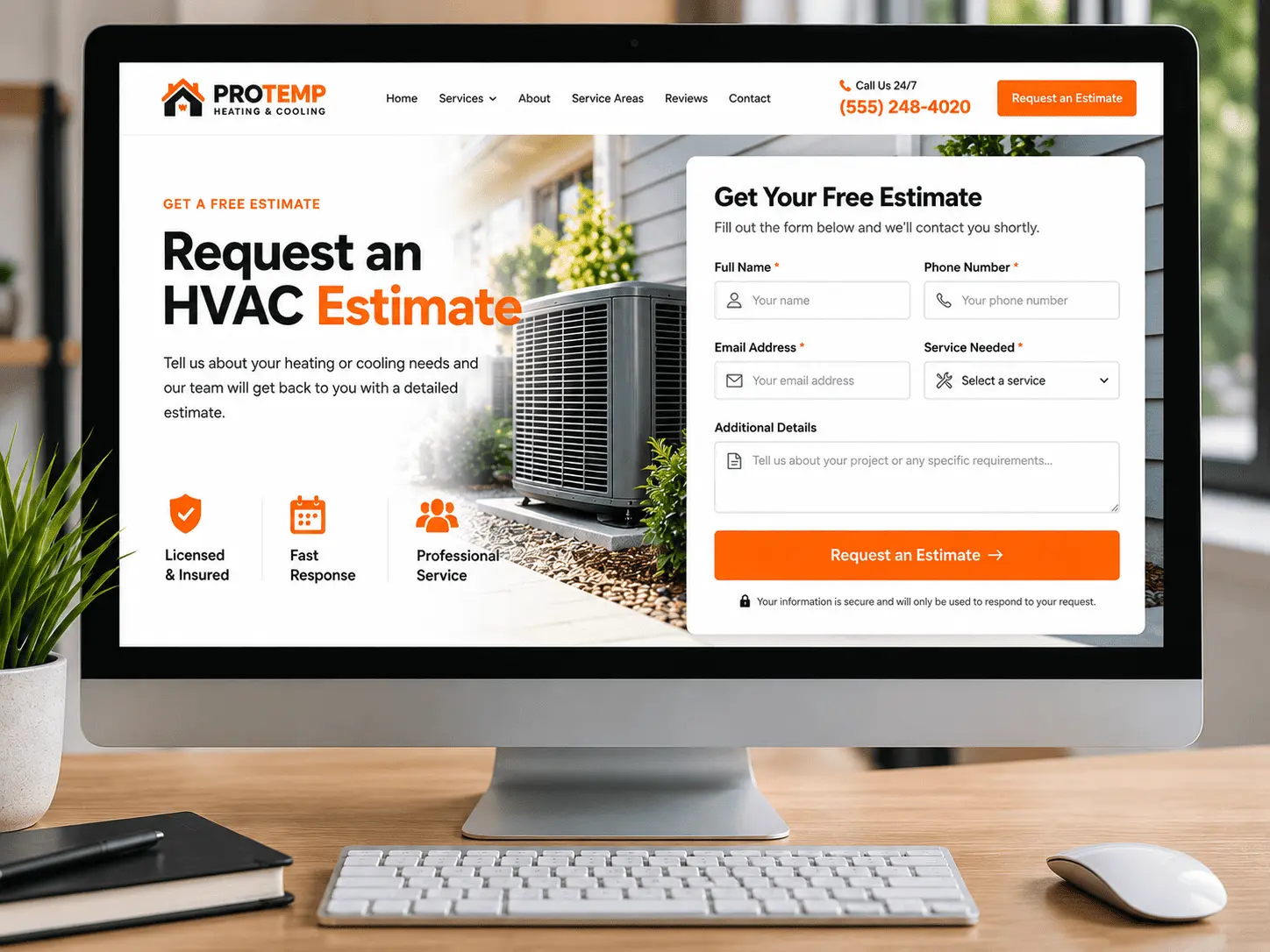
A professionally designed website can provide a better foundation for search engine optimization (SEO). Its structure, navigation, page organization, and technical implementation can help search engines discover and understand your content.
However, website design alone does not guarantee higher rankings. Search visibility also depends on content relevance, competition, website accessibility, authority, location, and other factors.
Website features that support HVAC SEO
Clear service pages: Create dedicated pages for important services when each page provides genuinely useful, distinct information. Explain what the service involves, who needs it, and how customers can enquire.
Descriptive headings and page titles: Use clear titles and headings that accurately reflect the page’s subject instead of repeating keywords unnaturally.
Logical website structure: Organize your navigation so users can move easily between your homepage, service pages, service-area information, and contact page.
Useful service-area content: If your business serves multiple locations, explain where you operate and what services you provide there. Avoid publishing numerous nearly identical location pages with little original value.
Technical accessibility: Make sure search engines can access important pages and resources. Check indexing, broken links, mobile usability, and relevant technical issues.
Relevant internal links: Connect related service pages and educational resources so visitors can discover useful information without repeatedly returning to the main menu.
For official guidance, consult Google’s SEO Starter Guide, which explains how website organization, useful content, descriptive URLs, and relevant links can support discovery.
For HVAC businesses that rely on local customers, a website can complement a properly maintained Google Business Profile. Accurate business details and consistent information help customers understand where the business operates, but local rankings are not determined by website design alone.
4. Make It Easier for Visitors to Become Leads
Website traffic has limited business value when visitors cannot easily take the next step. Professional website design can help bridge the gap between someone researching HVAC services and someone contacting your business.
The objective is not to pressure every visitor into submitting a form. It is to make relevant actions clear and convenient.
Conversion-focused features for HVAC websites
Depending on your business model, useful features may include:
A visible phone number with click-to-call functionality.
A quote-request or estimate form.
A booking or scheduling option, if your business supports it.
Service-specific calls to action.
Clear information about the next steps after submitting an enquiry.
Separate pathways for residential and commercial customers when their needs differ.
Confirmation messages after successful form submissions.
For example, a commercial customer looking for ongoing HVAC maintenance may need to describe a facility, equipment type, or service requirement. A residential customer may simply want to request an installation estimate. A well-organized website can guide each visitor toward the appropriate enquiry process.
Keep forms focused on information your team actually needs. Requesting too many details upfront can discourage people from completing them.
Also, make sure forms work properly, notifications reach the intended recipient, and submissions are handled securely.
Measure the outcome: Track completed forms, calls where reliable tracking is available, booking requests, and qualified enquiries. Website visits alone do not tell you whether the site is helping your business generate opportunities.
5. Communicate Your Services More Clearly
HVAC businesses may provide a range of services, from residential equipment installation and repairs to commercial system maintenance and mechanical contracting. If your website presents every service in one long paragraph, visitors may struggle to identify the information relevant to them.
Professional website design helps organize information into a logical structure.
How to organize HVAC services
Start with a dedicated services overview page. Then create individual service pages when the services warrant separate explanations.
Each service page can explain:
What the service includes.
Which customers it is intended for.
The problems or requirements it addresses.
What the service process involves.
Relevant qualifications or certifications, where applicable and verified.
Common questions customers may have.
How to request more information or an estimate.
For instance, a company serving residential and commercial clients could organize its navigation into separate sections for residential services, commercial HVAC, maintenance programs, and installation services, provided those categories accurately reflect its actual offering.
Clear organization benefits visitors and gives your business more space to explain important services in detail.
Avoid creating a separate page for every minor keyword variation. Each page should offer meaningful information that helps a particular audience make a decision.
6. Deliver a Better User Experience With Reliable Performance
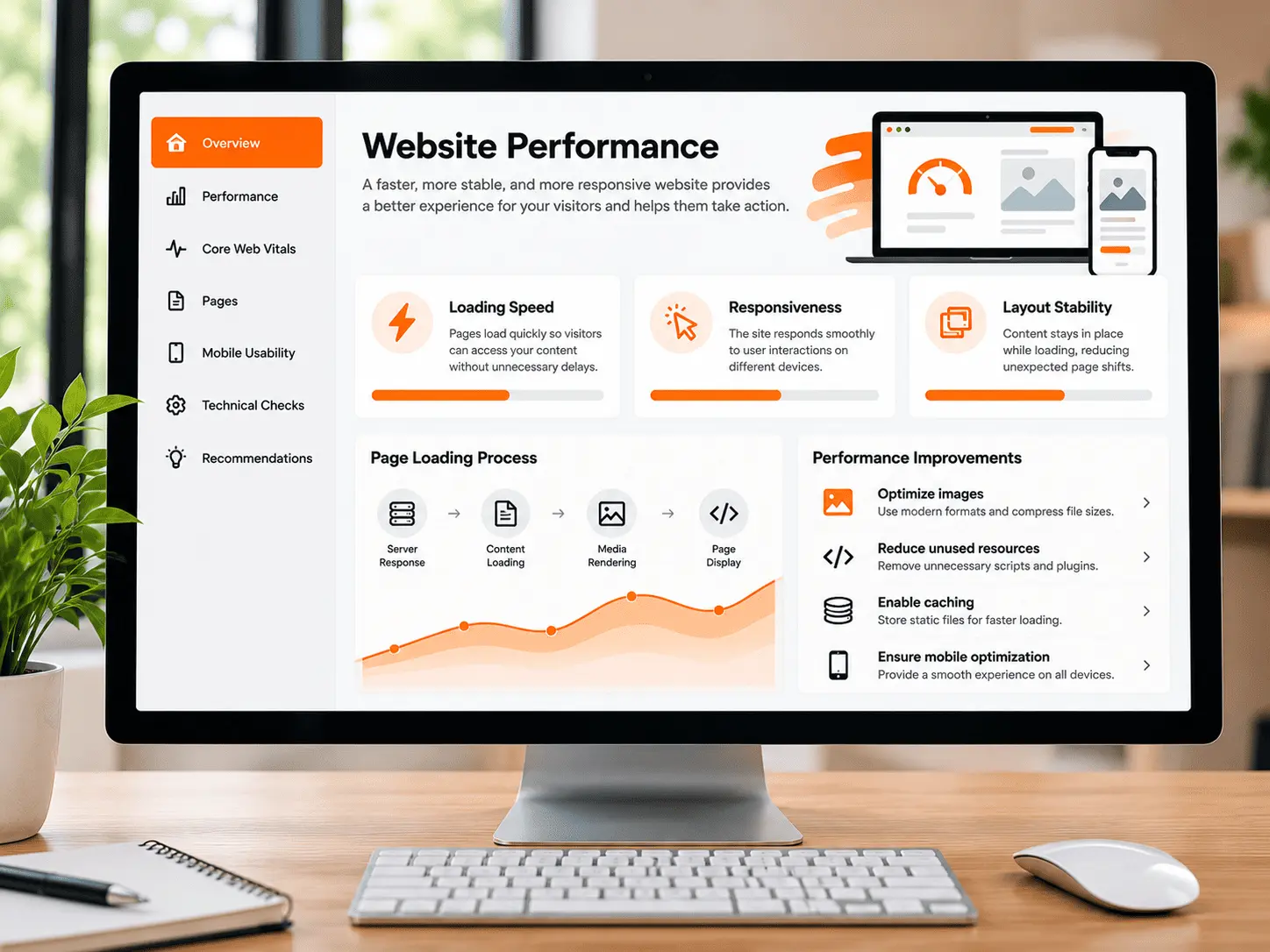
A website can have excellent content and attractive visuals yet still frustrate visitors if pages load slowly, buttons do not respond, or layouts shift while loading.
Website performance and usability influence how easily people can access information and complete important tasks.
Google’s Core Web Vitals guidance covers three user-experience measurements:
Largest Contentful Paint (LCP): Measures how quickly the main content loads.
Interaction to Next Paint (INP): Measures responsiveness to user interactions.
Cumulative Layout Shift (CLS): Measures unexpected visual movement during loading.
Google’s recommended good thresholds are LCP at 2.5 seconds or less, INP at 200 milliseconds or less, and CLS at 0.1 or less, assessed at the 75th percentile of page visits. These are performance targets, not guarantees of better rankings or more leads.
Practical ways to improve performance
Compress images and use suitable modern image formats.
Remove unnecessary plugins, scripts, and third-party widgets.
Use reliable hosting appropriate for the website’s needs.
Configure caching and other performance features correctly.
Avoid oversized video backgrounds and excessive animation.
Test important pages on mobile connections and different devices.
Monitor real-user performance where sufficient data is available.
Use tools such as PageSpeed Insights to identify potential issues, then prioritize fixes according to their impact and feasibility.
Remember that installing a caching plugin or achieving a high laboratory score does not automatically resolve every performance problem. Test the actual website and its essential interactions.
7. Strengthen Your Brand and Support Long-Term Growth
Your website is a central place to explain what makes your HVAC business different. Unlike a short business-directory listing, it gives you room to communicate your services, experience, operating approach, and customer expectations.
A consistent brand presentation can also help customers recognize your business across your website, business profile, email communications, and other marketing channels.
When planning a new website or improving an existing one, choosing the right specialist matters. Our guide on how to choose a WordPress developer for HVAC companies explains what to evaluate, including relevant experience, technical skills, SEO knowledge, pricing, and ongoing support.
Build a website that can grow with your business
A flexible website structure can make it easier to introduce new services, improve existing pages, publish helpful articles, and support future marketing campaigns.
For example, you might add:
New service pages when your offering expands.
Educational articles answering common customer questions.
Genuine project examples or case studies, with permission.
Frequently asked questions about your services.
Additional service-area information where it is genuinely useful.
Analytics and conversion tracking to evaluate marketing activity.
A well-organized WordPress website can support these changes, but maintainability depends on the quality of the implementation, hosting, theme, plugins, and ongoing maintenance.
Measure progress using meaningful indicators such as qualified enquiries, form completion rates, mobile engagement, organic search impressions, and relevant search traffic. Compare results over time and consider seasonal demand, advertising activity, pricing, competition, and service availability before attributing changes to website improvements.
Professional website design is one component of a broader growth strategy, not a substitute for reliable service, effective operations, or appropriate marketing.
How to Tell Whether Your HVAC Website Needs an Upgrade
Not every HVAC company needs a complete redesign. Sometimes targeted improvements to navigation, service pages, forms, or performance are sufficient.
Review your current website against these questions:
Can visitors understand your services and target customers quickly?
Is your phone number easy to find on a mobile device?
Do your important pages explain services clearly?
Can customers request an estimate without unnecessary difficulty?
Do your pages load and respond reliably?
Are your contact forms working and delivering enquiries?
Does the site accurately represent your business?
Can you measure meaningful website actions?
Are there outdated pages, broken links, or confusing navigation paths?
If several important elements are missing, start by identifying which issues affect customer understanding, accessibility, or enquiries most directly.
You can also consult our HVAC website design guide for a broader look at website planning and design considerations.
Frequently Asked Questions
Professional HVAC website design can improve your company's presentation, mobile usability, service information, website navigation, and enquiry process. It can also provide a better foundation for SEO and help you measure how visitors interact with your website.
Yes, a well-designed website can make it easier for prospective customers to call, request an estimate, or submit an enquiry. Results depend on several factors, including website traffic, customer demand, competition, pricing, reputation, and how effectively enquiries are handled.
Mobile-friendly design helps visitors read service information, navigate pages, and contact your business using a smartphone. Responsive layouts, readable text, accessible buttons, and click-to-call phone numbers can make these actions more convenient.
Website design can support SEO through logical navigation, accessible pages, clear headings, descriptive page titles, useful content, and reliable performance. However, design alone cannot guarantee search rankings. SEO also depends on relevance, competition, technical accessibility, and other factors.
Most HVAC business websites benefit from a clear homepage, relevant service pages, accurate contact information, a usable mobile layout, appropriate calls to action, and a straightforward enquiry process. Depending on the business, customer reviews, service-area information, project examples, and FAQs can also be valuable.
Consider a redesign if the site consistently looks outdated, is difficult to use on mobile devices, has confusing navigation, does not explain your services clearly, or makes contacting your business difficult. If the underlying design is sound, targeted improvements may be more practical than rebuilding the entire website.
The cost of professional HVAC website design depends on the number of pages, design requirements, content preparation, integrations, SEO scope, and ongoing support. To understand your options, explore our HVAC website design pricing and compare the available packages. Request a detailed proposal that distinguishes one-time development costs from recurring expenses such as hosting, maintenance, and software subscriptions.
Monitor qualified enquiries, completed forms, relevant phone calls where tracking is available, organic search impressions, relevant website traffic, and conversion rates. Review performance over time and account for seasonality, marketing activity, and changes in customer demand.
Conclusion: Make Your Website Work Harder for Your HVAC Business
The main HVAC company website design benefits include stronger first impressions, improved mobile usability, a better foundation for SEO, clearer service information, easier lead generation, more reliable performance, and a website that can support future business development.
The right improvements depend on your existing website and business goals. A company with an outdated design may need a broader redesign, while another may benefit more from targeted technical fixes, clearer service pages, or a better enquiry process.
At HVAC Web Design Lab, we specialize in website design, website redesign, and local SEO for HVAC businesses. If you want to identify opportunities to improve your website, explore our HVAC web design services or request a free website audit.
A useful starting point is to evaluate your website from the customer’s perspective: can people find the right information, trust what they see, and contact your business without unnecessary obstacles?
If you would like to discuss your website goals or explore potential improvements for your HVAC business, contact HVAC Web Design Lab to discuss your project and requirements.

About the Author
Tanvir Siddiki
Founder & HVAC Web Design SpecialistTanvir is the founder of HVAC Web Design Lab, specializing in website design, website redesign, and local SEO for HVAC businesses. He focuses on creating professional, user-friendly websites that help heating and cooling companies strengthen their online presence.
One Comment